Historical Landmarks

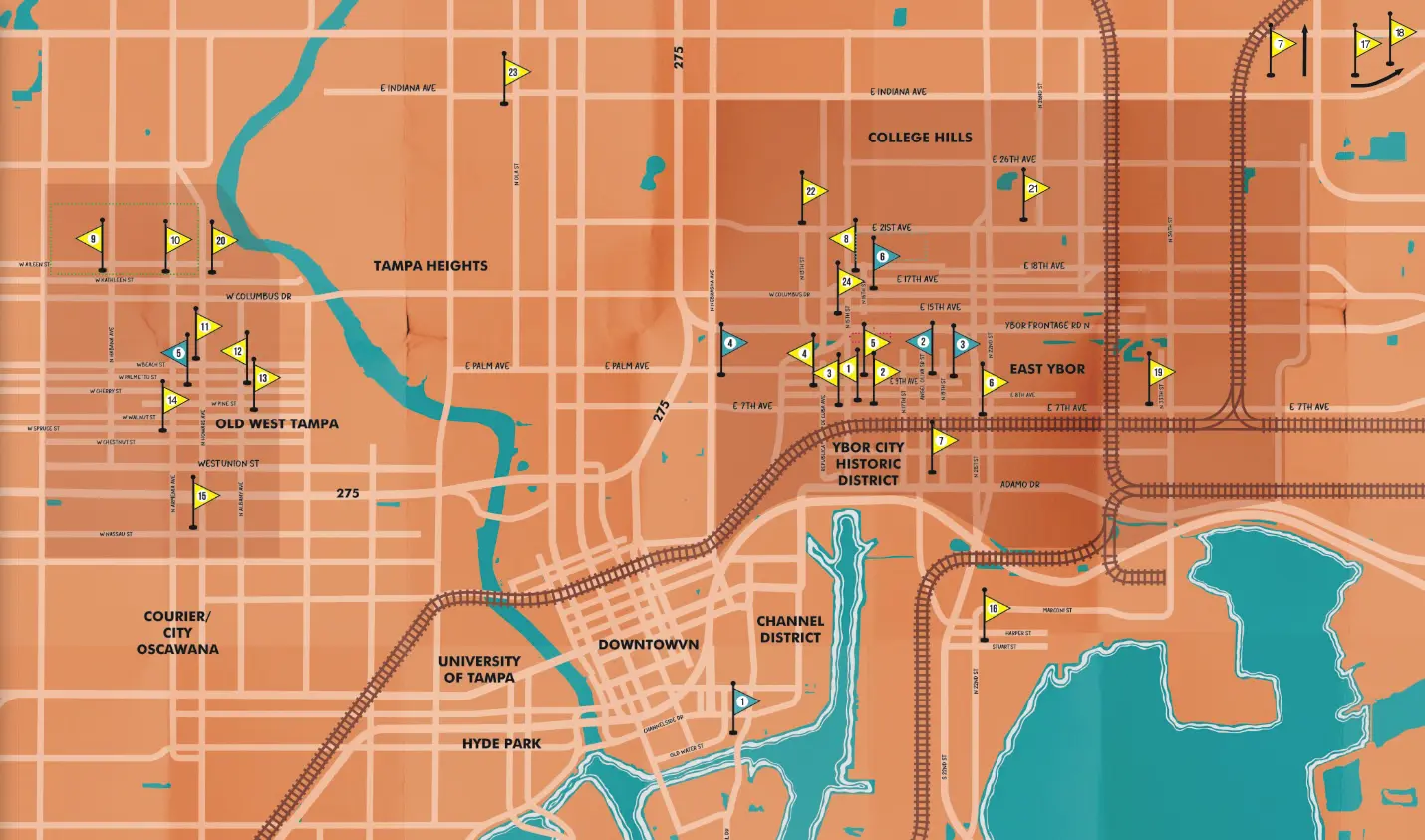
Visit our interactive map

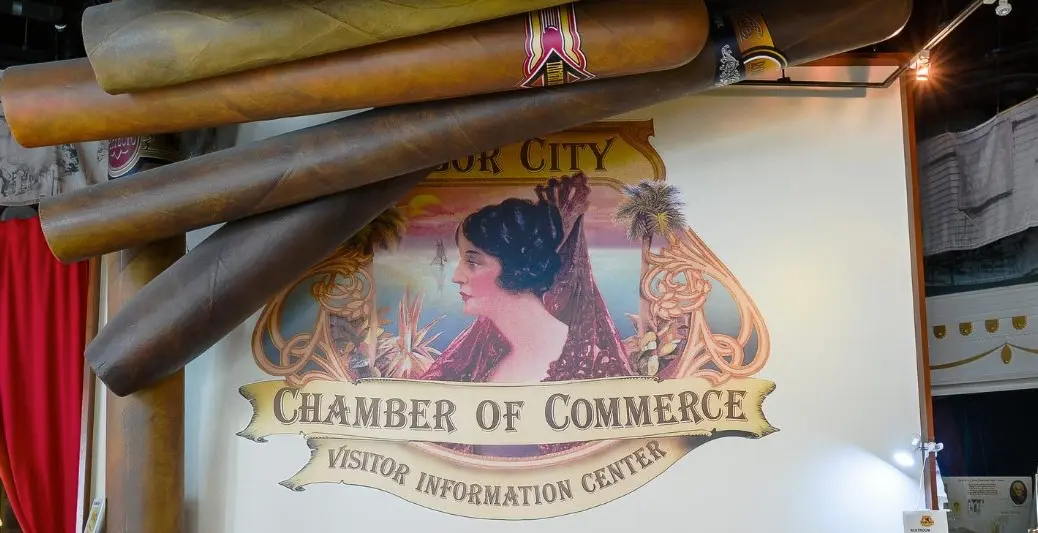
Ybor City Visitor Center

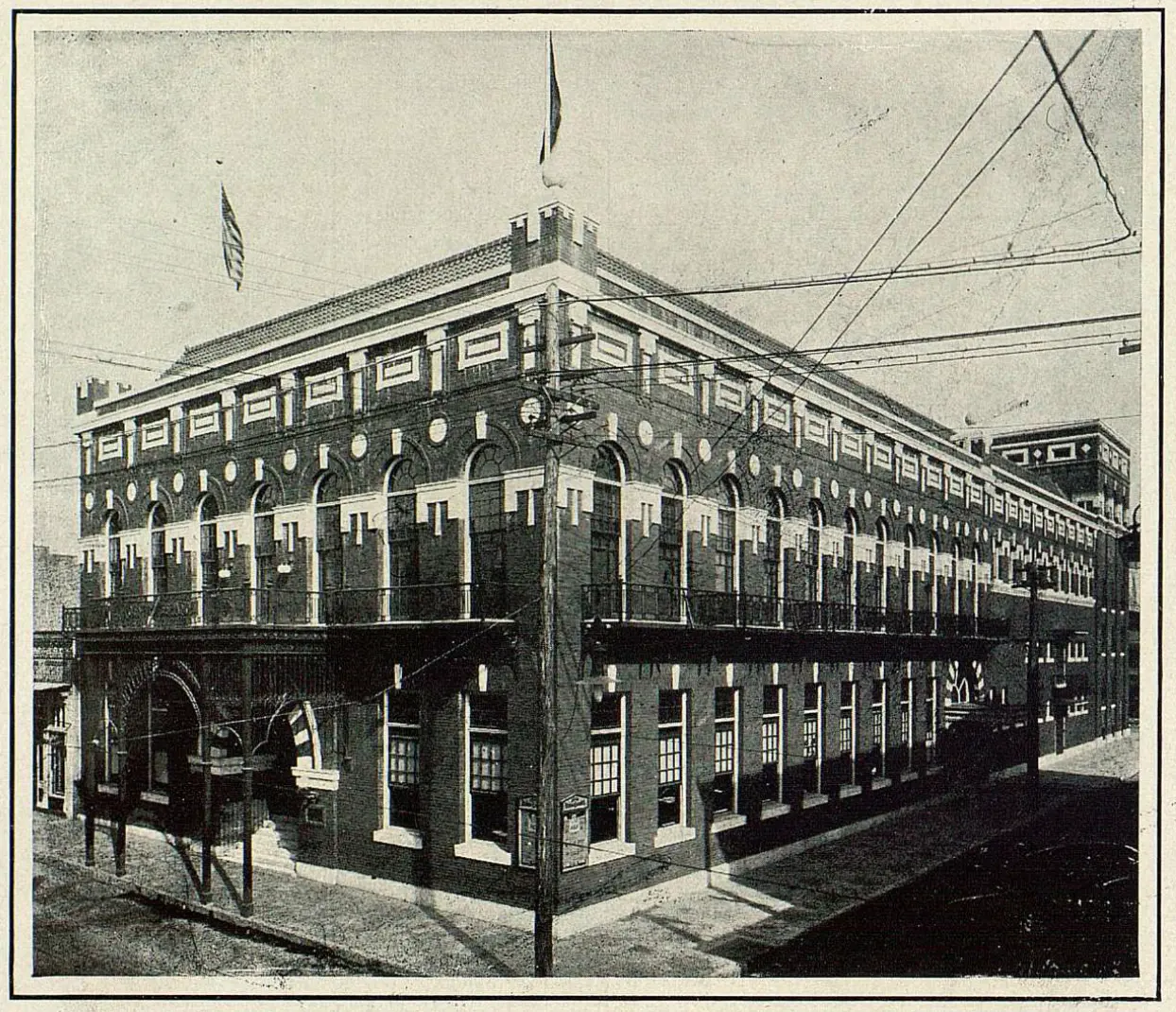
The Visitor Center is housed along with the Ybor City Cigar Museum, in the former clubhouse of the Centro Español in the heart of Ybor City. It offers visitors information about Ybor attractions, Ybor history, and other fun places to visit in the Tampa Bay area. The Center also hosts a 10-minute video on the history of Ybor City, and a gift shop with books and memorabilia related to Tampa history.
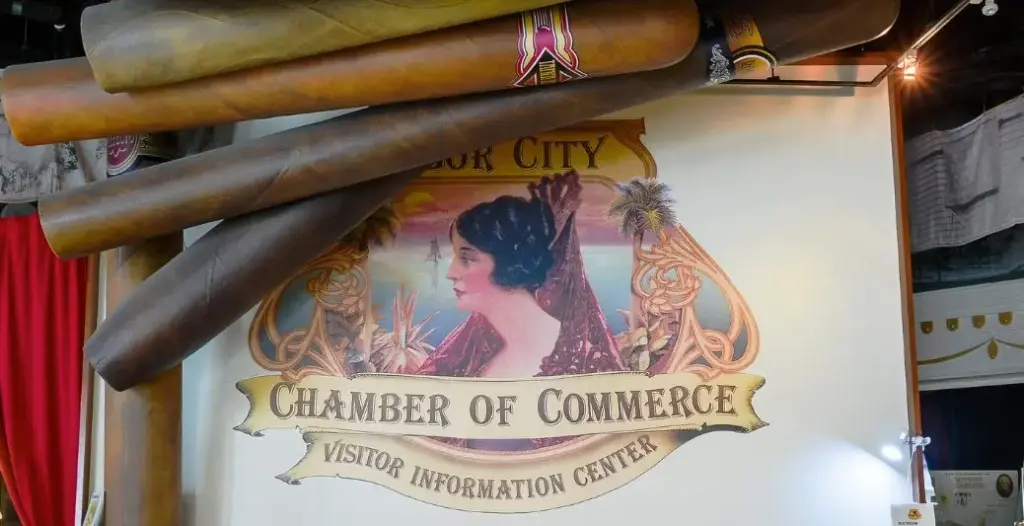
Ybor City Visitor Center

The Visitor Center is housed along with the Ybor City Cigar Museum, in the former clubhouse of the Centro Español in the heart of Ybor City. It offers visitors information about Ybor attractions, Ybor history, and other fun places to visit in the Tampa Bay area. The Center also hosts a 10-minute video on the history of Ybor City, and a gift shop with books and memorabilia related to Tampa history.
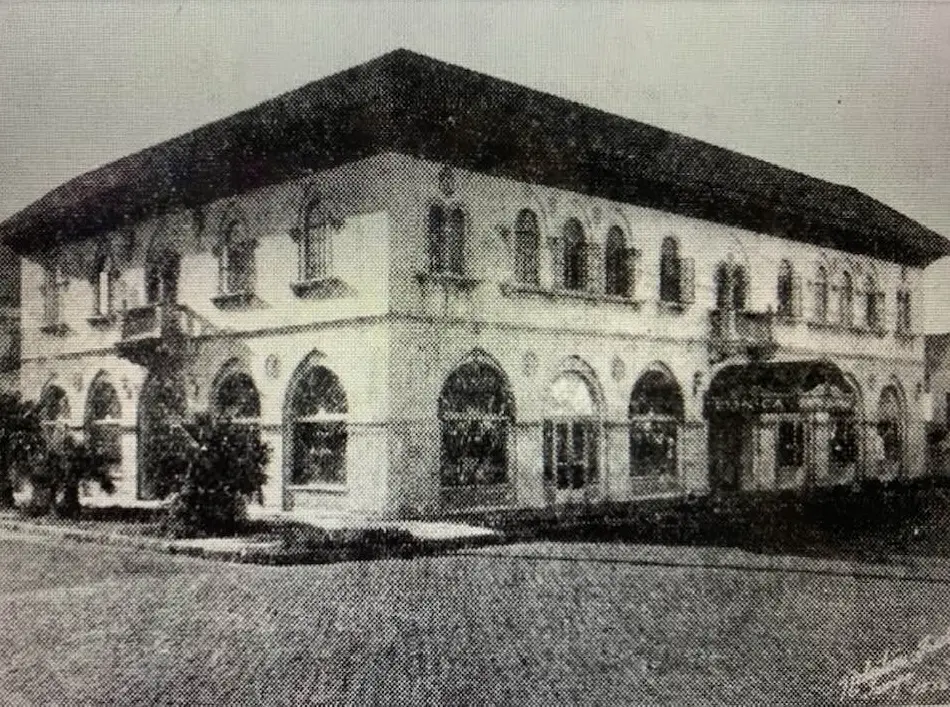
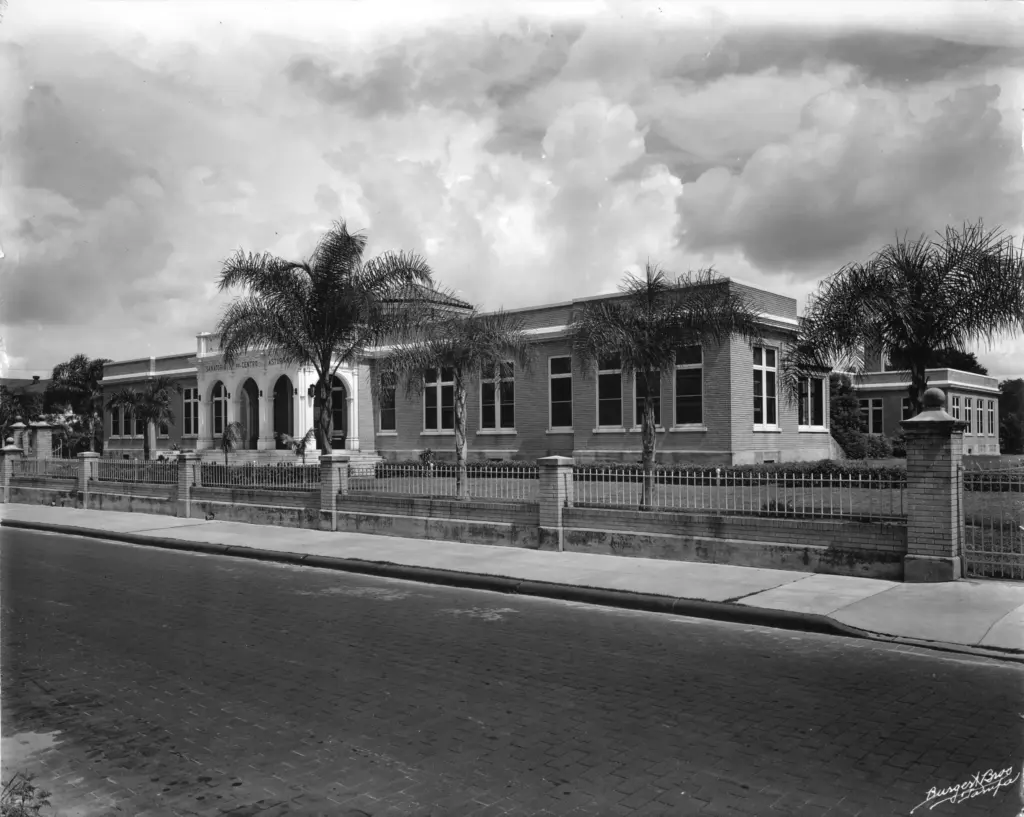
Former Centro Español Clubhouse, Ybor City

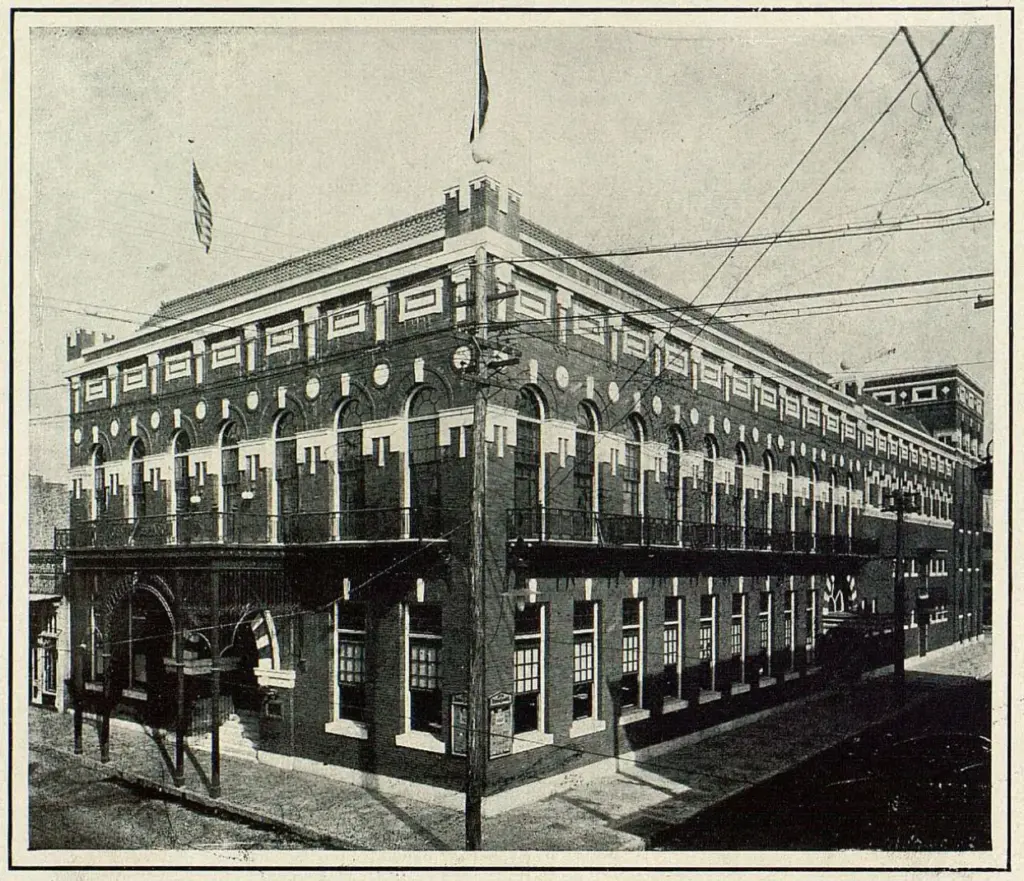
“On the 7th of September 1891 the Centro Español was finally established as a Society for recreation and instruction, being its main objective , [...], ‘to provide the means for education and beneficial recreation of its members…’ (Spanish Action in Tampa). The first clubhouse was built in Ybor City at the corner Seventh Avenue and Sixteenth Street, at a cost of $16,000. A new clubhouse (still standing) was built at the same site in 1912. Today this 113-year-old building houses among other things, a shopping center and the Ybor City Chamber of Commerce’s Visitors Center."

Former Centro Español Clubhouse, Ybor City

“On the 7th of September 1891 the Centro Español was finally established as a Society for recreation and instruction, being its main objective , [...], ‘to provide the means for education and beneficial recreation of its members…’ (Spanish Action in Tampa). The first clubhouse was built in Ybor City at the corner Seventh Avenue and Sixteenth Street, at a cost of $16,000. A new clubhouse (still standing) was built at the same site in 1912. Today this 113-year-old building houses among other things, a shopping center and the Ybor City Chamber of Commerce’s Visitors Center."

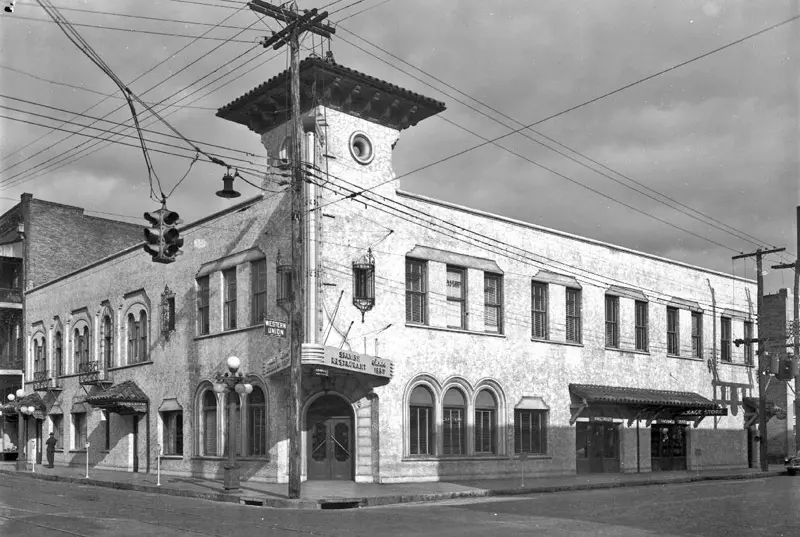
Former Las Novedades Restaurant

Las Novedades was founded in 1890 when Ybor City was a tiny village. Its proprietor was Manuel (Canuto) Menéndez. The coffee shop was a favorite rendezvous for the pioneer cigar makers at the Sánchez y Haya Cigar Factory located across the street. In November 1891, Las Novedades was destroyed by fire, It reopened in 1892. (Text of plaque) This legendary restaurant survived into the early 1970s. Today, this building has been beautifully incorporated into the Hotel Haya.

Former Las Novedades Restaurant

Las Novedades was founded in 1890 when Ybor City was a tiny village. Its proprietor was Manuel (Canuto) Menéndez. The coffee shop was a favorite rendezvous for the pioneer cigar makers at the Sánchez y Haya Cigar Factory located across the street. In November 1891, Las Novedades was destroyed by fire, It reopened in 1892. (Text of plaque) This legendary restaurant survived into the early 1970s. Today, this building has been beautifully incorporated into the Hotel Haya.

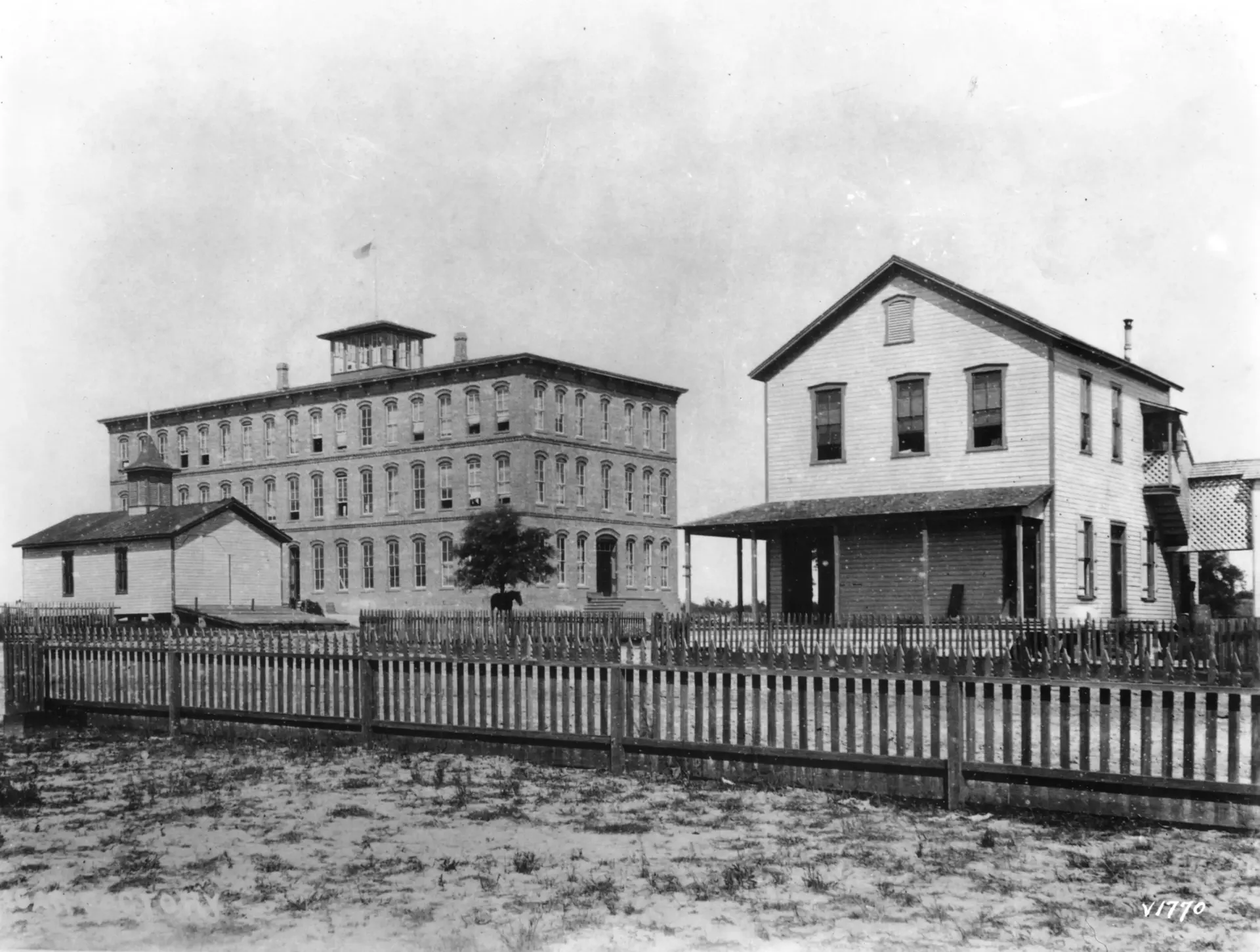
Former V. Martínez Ybor & Co

Vicente Martínez Ybor, like many of his friends and competitors, was born in Spain but got into the cigar business in Cuba. Martínez Ybor and several like-minded cigar factory owners decided, in 1886, to build cigar factories in Tampa, Florida. Their goal was to be able to manufacture “Clear Havana Cigars”; ie, cigars that would “clear” or avoid tariffs placed on Cuban cigars, because even though they were made with tobacco imported from Cuba, they were manufactured on US soil. The Martínez Ybor factory was one of the largest of Tampa’s cigar factories, and was the first brick building in Ybor City

Former V. Martínez Ybor & Co

Vicente Martínez Ybor, like many of his friends and competitors, was born in Spain but got into the cigar business in Cuba. Martínez Ybor and several like-minded cigar factory owners decided, in 1886, to build cigar factories in Tampa, Florida. Their goal was to be able to manufacture “Clear Havana Cigars”; ie, cigars that would “clear” or avoid tariffs placed on Cuban cigars, because even though they were made with tobacco imported from Cuba, they were manufactured on US soil. The Martínez Ybor factory was one of the largest of Tampa’s cigar factories, and was the first brick building in Ybor City

La Benéfica Española, former outpatient clinic and pharmacy for Centro Español Hospital

In 1930, the Centro Español de Tampa established La Benéfica Española, a medical clinic on Ninth Avenue and 14th Street, that offered state-of-the art outpatient care to the club’s members. A second building was purchased in 1937. La Benéfica Española was the first local organization to hire personnel specializing in pediatrics; it was also the first to offer oral surgery. Well into the 1960s, thousands of tampeño kids would get their check-ups and vaccinations at the conveniently located clinic. The doctors of the Benéfica also made house calls when necessary.

La Benéfica Española, former outpatient clinic and pharmacy for Centro Español Hospital

In 1930, the Centro Español de Tampa established La Benéfica Española, a medical clinic on Ninth Avenue and 14th Street, that offered state-of-the art outpatient care to the club’s members. A second building was purchased in 1937. La Benéfica Española was the first local organization to hire personnel specializing in pediatrics; it was also the first to offer oral surgery. Well into the 1960s, thousands of tampeño kids would get their check-ups and vaccinations at the conveniently located clinic. The doctors of the Benéfica also made house calls when necessary.

Columbia Restaurant

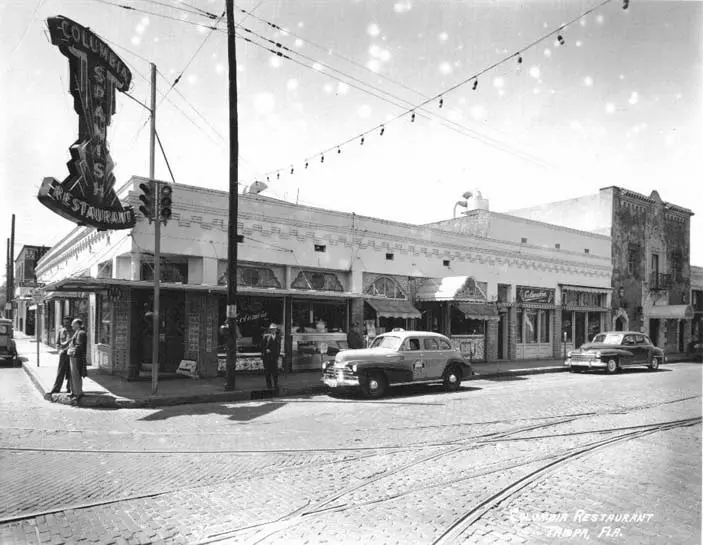
Even though a nation-wide Spanish-American identity and cuisine never really congealed in the US –as it would in the case of Italian-Americans, for example– this magnificent restaurant, established in 1905 in the heart of Ybor City, offers us a glimpse into what the decor and cuisine of the restaurants of such a community would have looked like had it coalesced. More than a century after the arrival of the original immigrants, the Columbia continues to serve delicious food whose ingredients and recipes trace, with flavors and aromas, the trajectories of tens of thousands of Spanish immigrants in the US. It is the oldest restaurant in Florida, and the oldest continuously operating Spanish restaurant in the USA. The Columbia has several locations in Florida, and is owned and run by Richard Gonzmart, a great- grandson of the restaurant’s founders.

Columbia Restaurant

Even though a nation-wide Spanish-American identity and cuisine never really congealed in the US –as it would in the case of Italian-Americans, for example– this magnificent restaurant, established in 1905 in the heart of Ybor City, offers us a glimpse into what the decor and cuisine of the restaurants of such a community would have looked like had it coalesced. More than a century after the arrival of the original immigrants, the Columbia continues to serve delicious food whose ingredients and recipes trace, with flavors and aromas, the trajectories of tens of thousands of Spanish immigrants in the US. It is the oldest restaurant in Florida, and the oldest continuously operating Spanish restaurant in the USA. The Columbia has several locations in Florida, and is owned and run by Richard Gonzmart, a great- grandson of the restaurant’s founders.

Former Corral - Wodiska & Cía. cigar factory

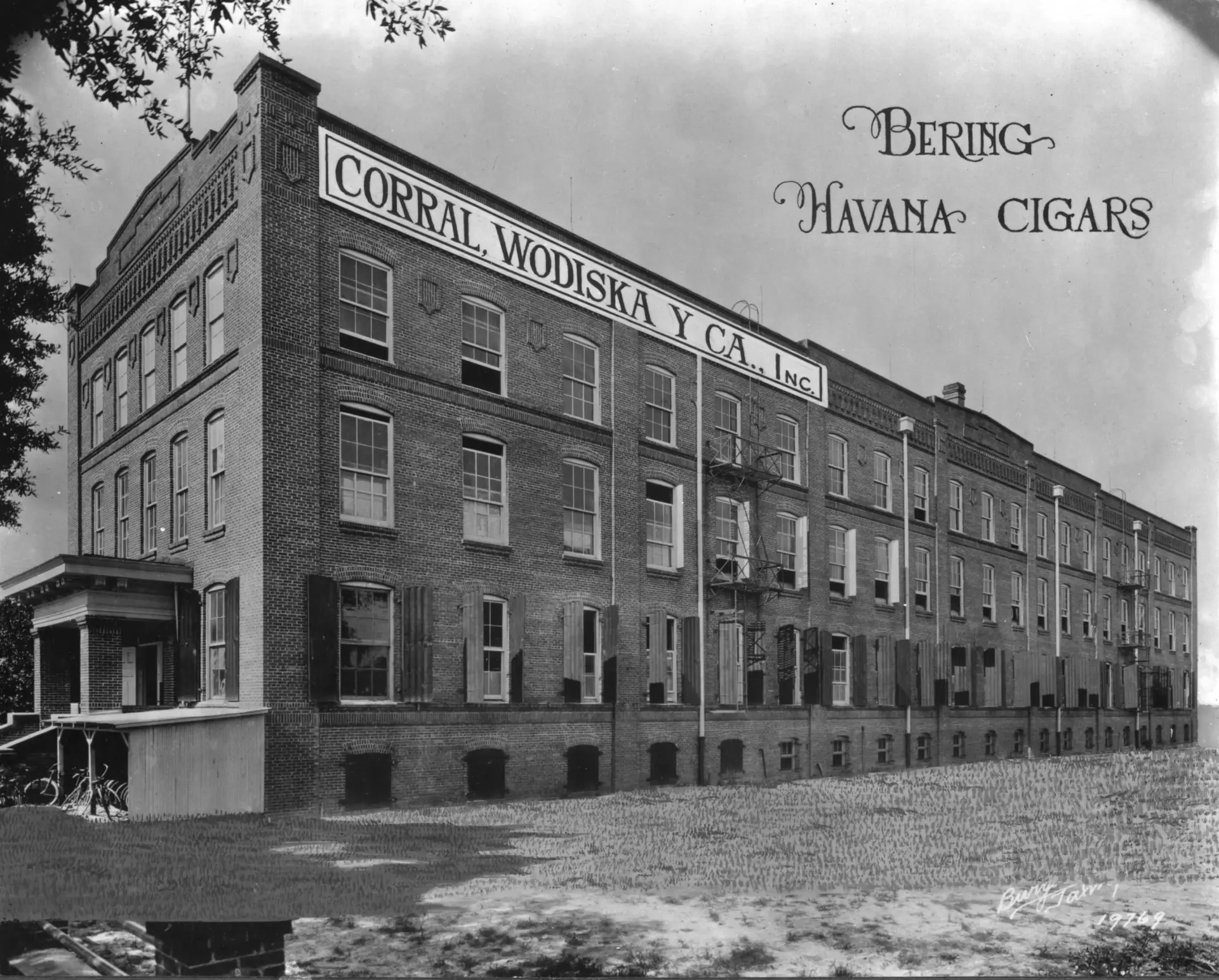
“In the year 1905, Mr. Manuel Corral and Mr. Francisco Sierra arrived in Tampa from Havana, Cuba, and entered into business with Mr. Edward Wodiska, a gentleman of high standing and credit throughout the cigar markets of the United States, under the name Corral, Wodiska and Co… Their splendidly equipped factory now accommodates 500 workmen under the most modern and hygienic conditions.” (Spanish Action in Tampa)

Former Corral - Wodiska & Cía. cigar factory

“In the year 1905, Mr. Manuel Corral and Mr. Francisco Sierra arrived in Tampa from Havana, Cuba, and entered into business with Mr. Edward Wodiska, a gentleman of high standing and credit throughout the cigar markets of the United States, under the name Corral, Wodiska and Co… Their splendidly equipped factory now accommodates 500 workmen under the most modern and hygienic conditions.” (Spanish Action in Tampa)

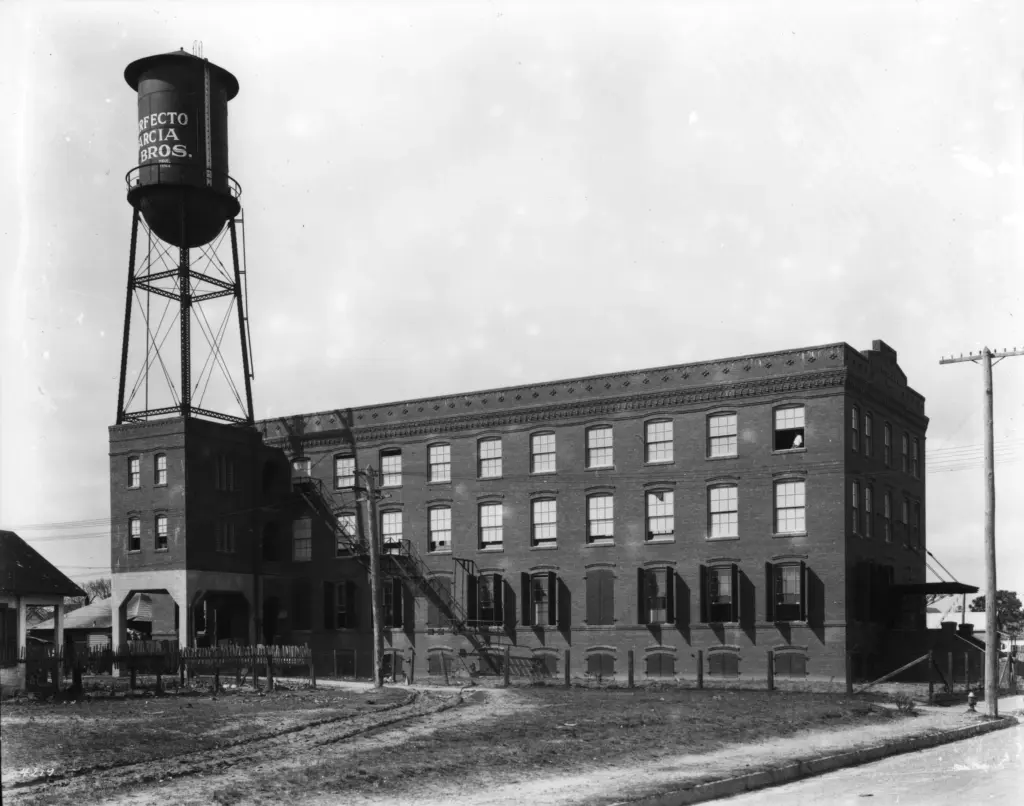
Former Perfecto García cigar factory

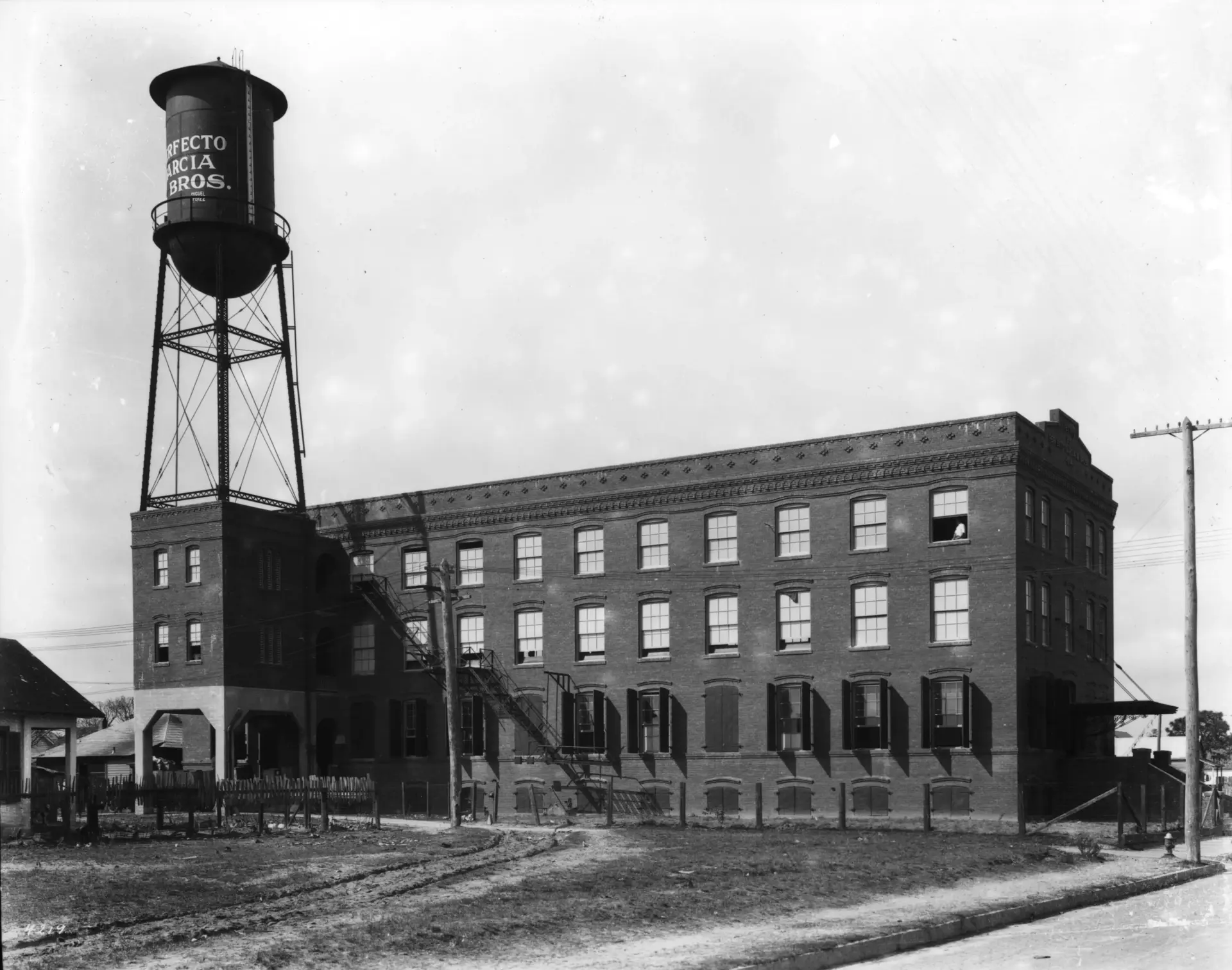
Like many of the protagonists in this story, Perfecto García and his brothers were born in Spain —more concretely, Asturias— and learned the cigar trade in Cuba. In the US, they were active in the cigar business first in Chicago,; in 1914, they built their first factory, and when it opened three years later, it employed 1,200 people.

Former Perfecto García cigar factory

Like many of the protagonists in this story, Perfecto García and his brothers were born in Spain —more concretely, Asturias— and learned the cigar trade in Cuba. In the US, they were active in the cigar business first in Chicago,; in 1914, they built their first factory, and when it opened three years later, it employed 1,200 people.

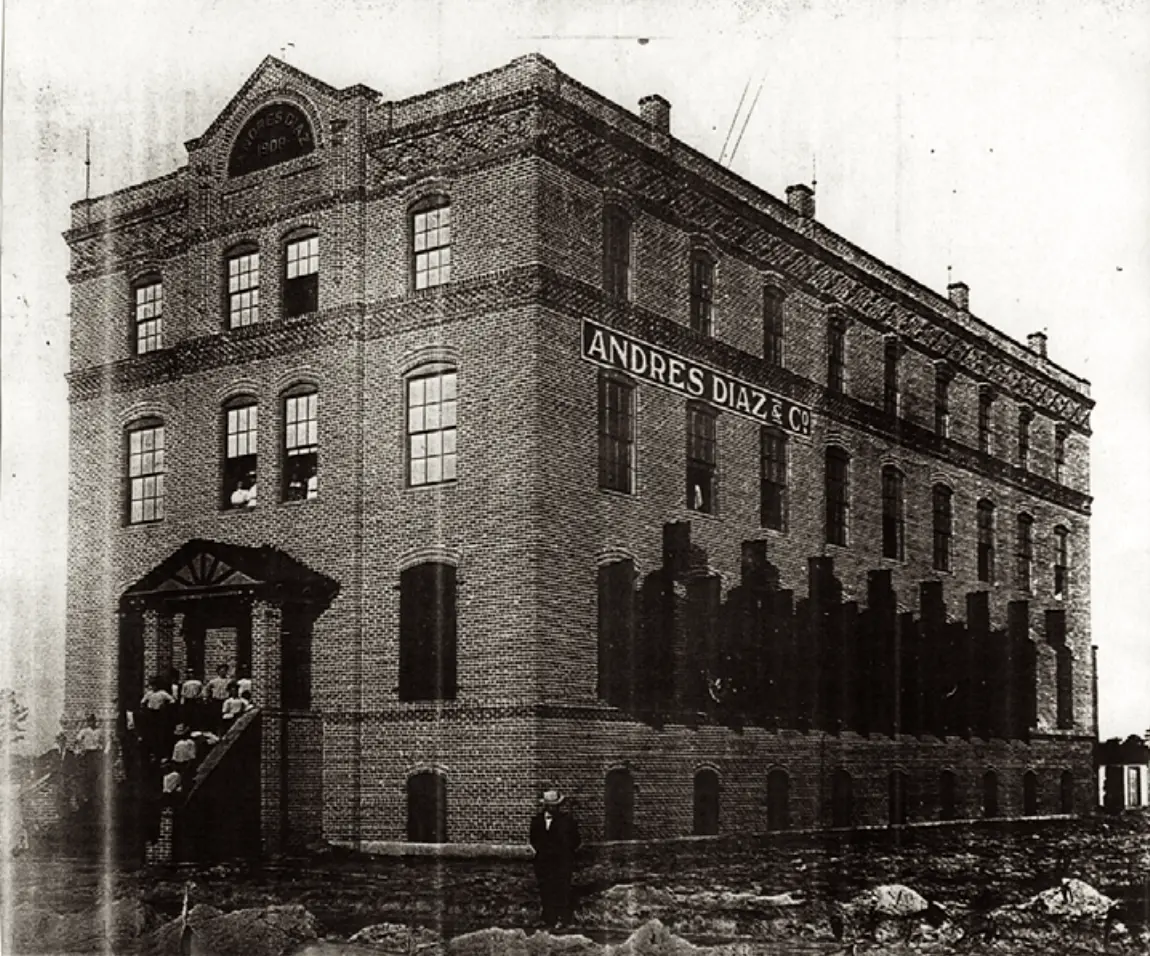
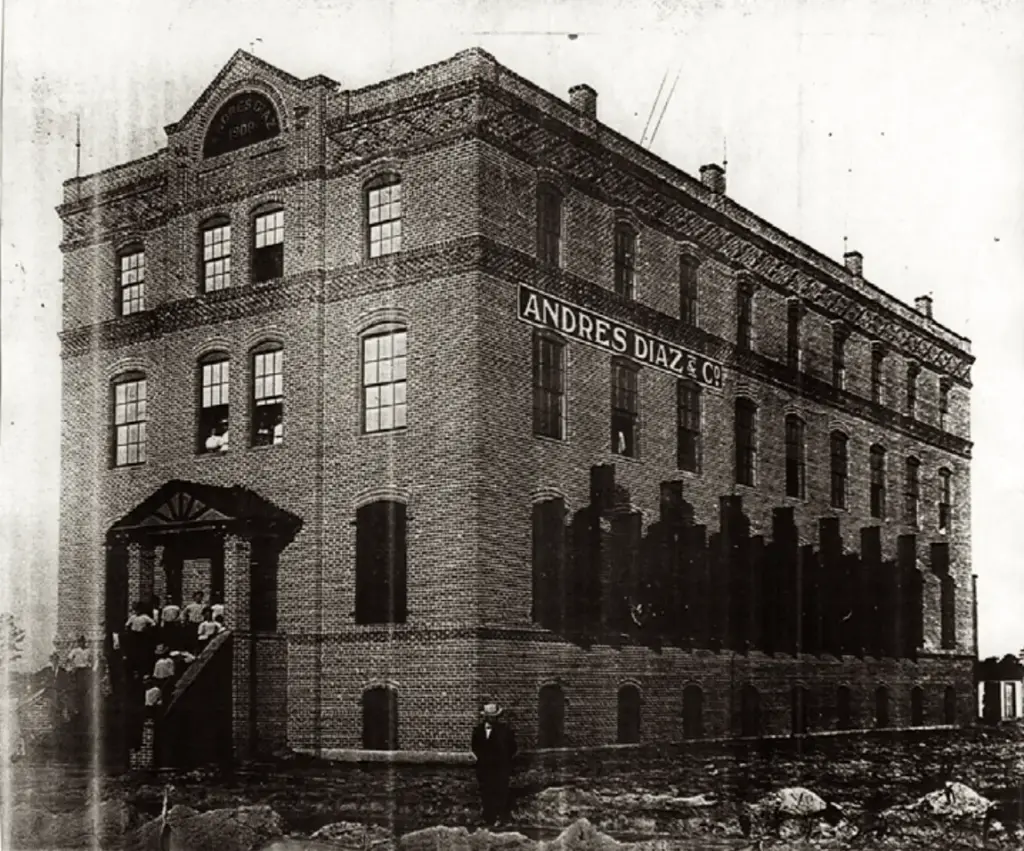
Former Andrés Díaz cigar factory

Andrés Diaz was another Spanish immigrant. Born in Asturias, he emigrated to Cuba where he learned the cigar trade, before emigrating for a second time, in the late 1800s, to New York. This West Tampa factory was built in 1908, and employed roughly 200 workers.The building has been recognized by the Tampa Historical Society and the West Tampa Centennial Society as an architectural landmark.

Former Andrés Díaz cigar factory

Andrés Diaz was another Spanish immigrant. Born in Asturias, he emigrated to Cuba where he learned the cigar trade, before emigrating for a second time, in the late 1800s, to New York. This West Tampa factory was built in 1908, and employed roughly 200 workers.The building has been recognized by the Tampa Historical Society and the West Tampa Centennial Society as an architectural landmark.

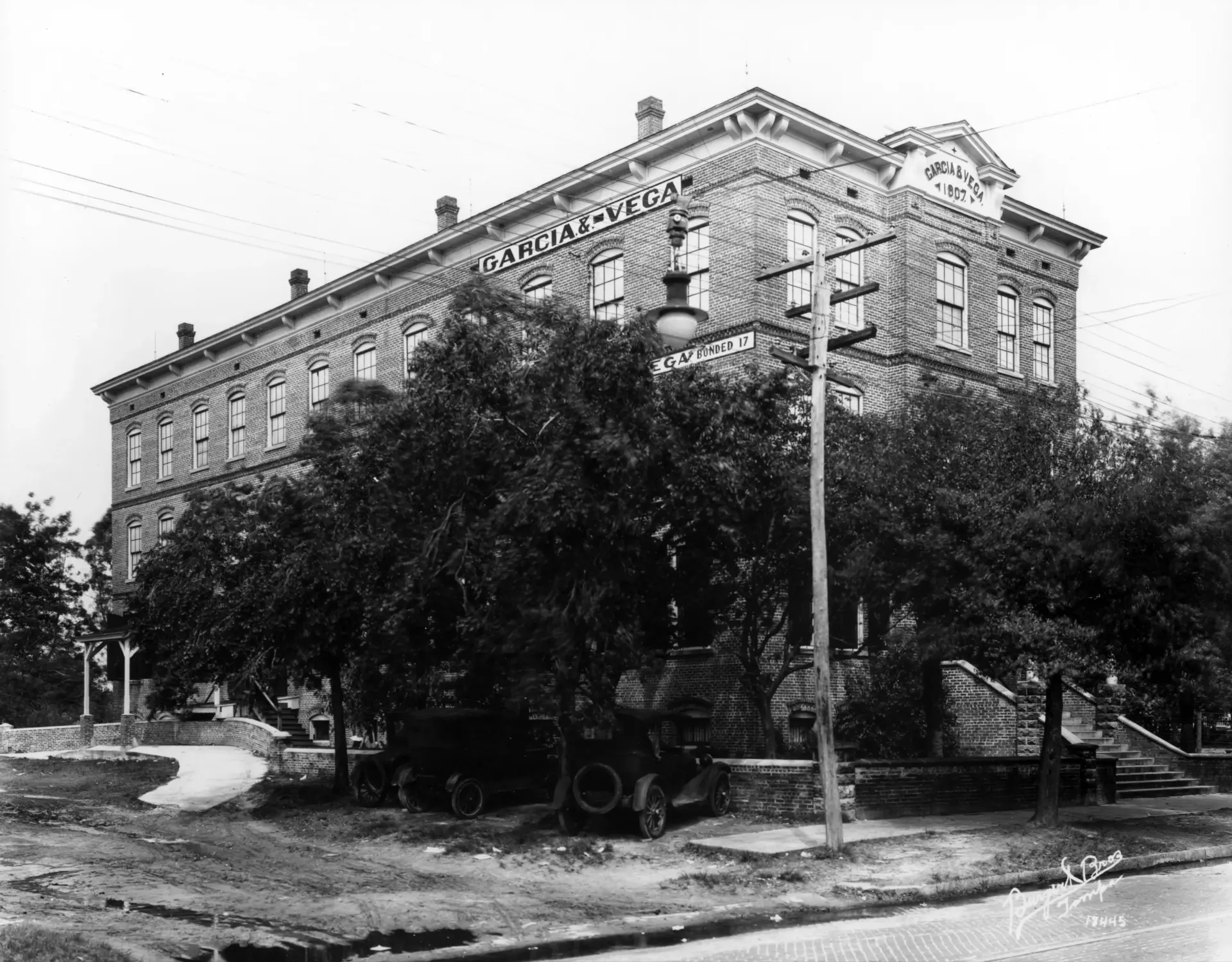
Former García y Vega cigar factory

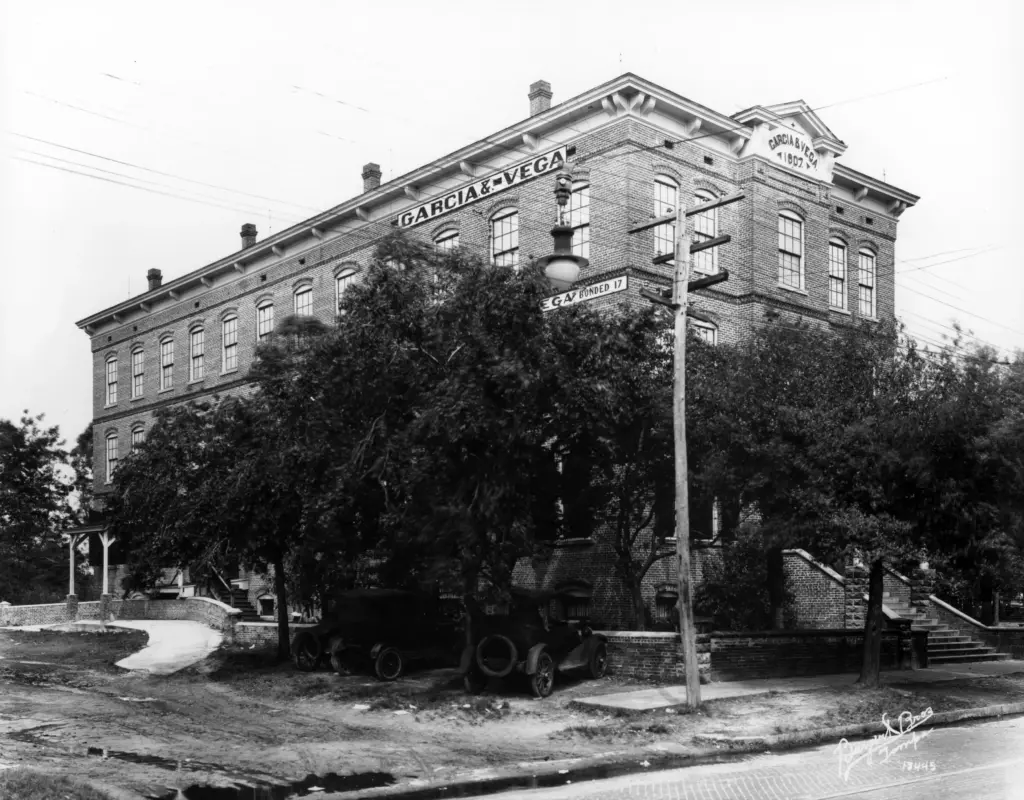
Alvaro García and José Vega were from Asturias, Spain; they emigrated to Cuba, where they learned the cigar trade, and later joined forces in the US (1882), forming the García & Vega label in New York. In 1908 they built a large factory in West Tampa, which still stands today.

Former García y Vega cigar factory

Alvaro García and José Vega were from Asturias, Spain; they emigrated to Cuba, where they learned the cigar trade, and later joined forces in the US (1882), forming the García & Vega label in New York. In 1908 they built a large factory in West Tampa, which still stands today.

Original boarding house for the Cuesta Rey Cigar Co

“Direction of the business has always been in the hands of the men who established it —A.L. Cuesta and P. Rey; both coming to this country from northwestern Spain while young men… They are prominently identified with the leading movements for upbuilding of their adopted city and for the improvement of conditions in the cigar industry. Their factory is a model one and noted for its cleanliness and sanitary arrangements.”

Original boarding house for the Cuesta Rey Cigar Co

“Direction of the business has always been in the hands of the men who established it —A.L. Cuesta and P. Rey; both coming to this country from northwestern Spain while young men… They are prominently identified with the leading movements for upbuilding of their adopted city and for the improvement of conditions in the cigar industry. Their factory is a model one and noted for its cleanliness and sanitary arrangements.”

Former Pendás y Álvarez Cigar Factory

“Among the Spaniards who engaged in the tobacco industry in this country, Messrs. Isidro Pendás and Miguel Álvarez hold a prominent place with their firm Y. Pendás & Álvarez. Both gentlemen were at one time apprentices in La Sultana factory of Havana, and both went together to New York, where they established the first or one of the first Clear Havana Cigar factories in this country in 1867. Their building in West Tampa is one of the most modern and beautiful, having a working capacity of 700 men…”

Former Pendás y Álvarez Cigar Factory

“Among the Spaniards who engaged in the tobacco industry in this country, Messrs. Isidro Pendás and Miguel Álvarez hold a prominent place with their firm Y. Pendás & Álvarez. Both gentlemen were at one time apprentices in La Sultana factory of Havana, and both went together to New York, where they established the first or one of the first Clear Havana Cigar factories in this country in 1867. Their building in West Tampa is one of the most modern and beautiful, having a working capacity of 700 men…”

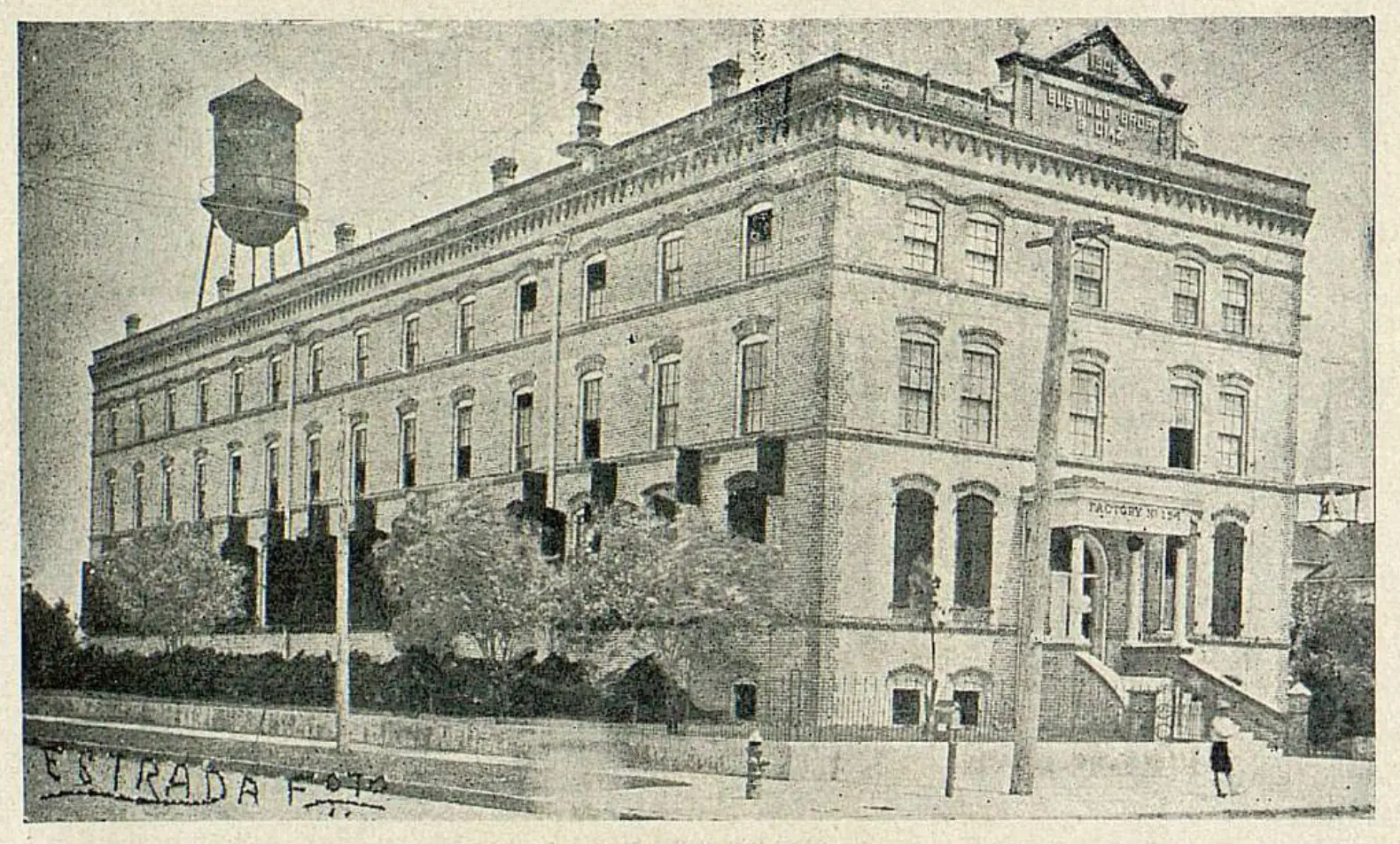
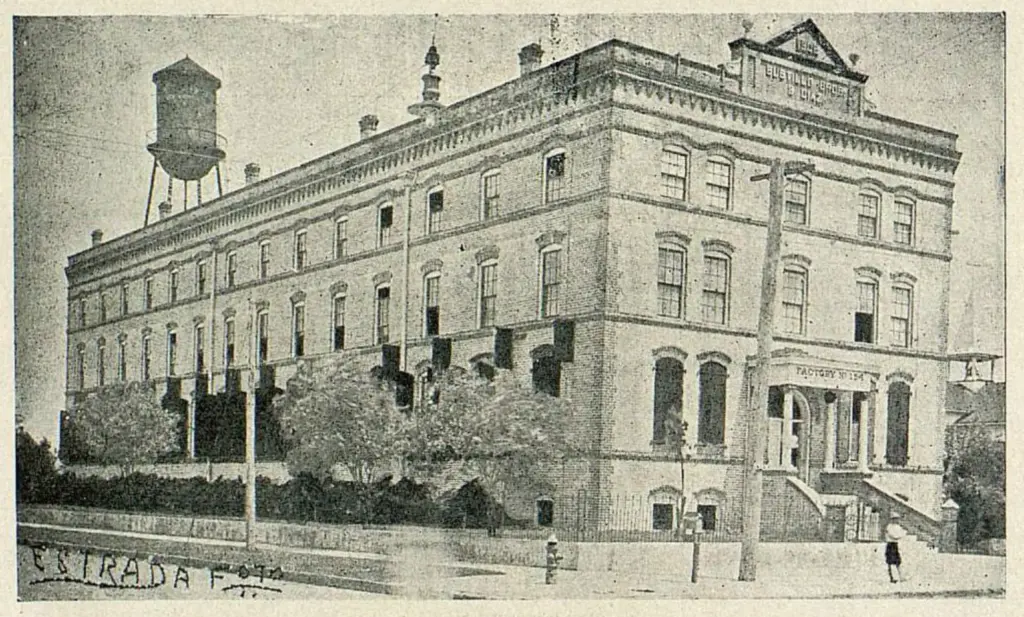
Former Bustillo Brothers Cigar Factory

“Among the notable houses that manufacture clear Havana cigars, the firm of Bustillo Bros and Díaz holds a prominent place, its reputation being known all over the United States. It was established in 1895… The factory is located in West Tampa in a magnificent three story building with a spacious cellar used as a warehouse for the stock, having all the necessary accommodations for the employment of 400 men…”

Former Bustillo Brothers Cigar Factory

“Among the notable houses that manufacture clear Havana cigars, the firm of Bustillo Bros and Díaz holds a prominent place, its reputation being known all over the United States. It was established in 1895… The factory is located in West Tampa in a magnificent three story building with a spacious cellar used as a warehouse for the stock, having all the necessary accommodations for the employment of 400 men…”

Former Santaella Cigar Factory

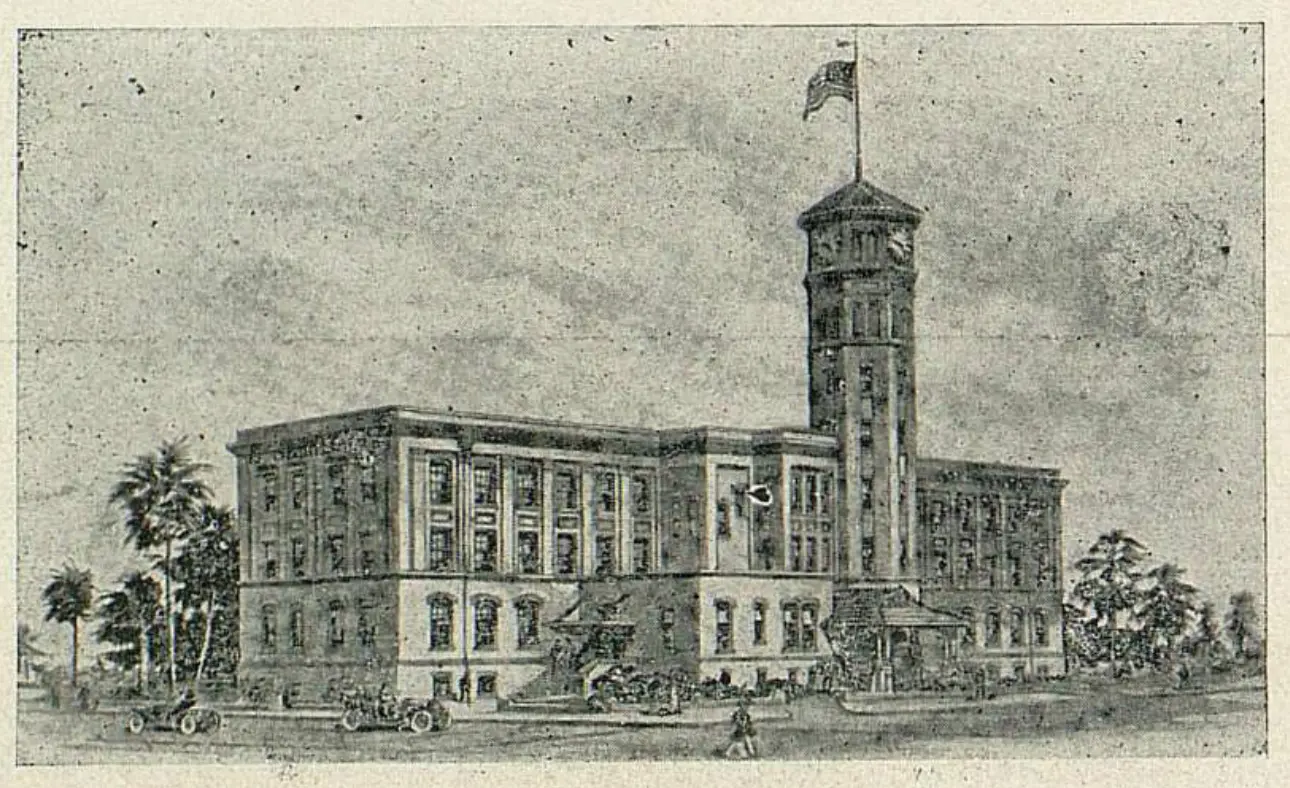
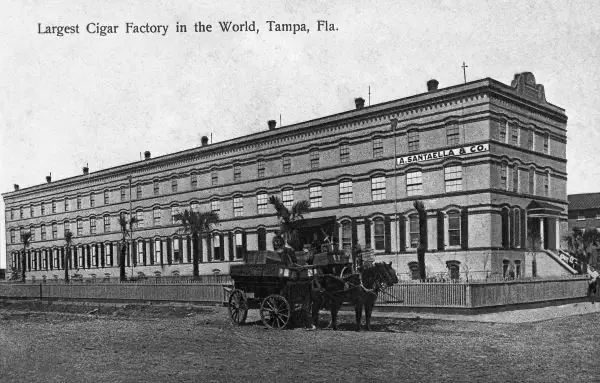
Antonio Santaella was born in Seville, Spain: his partner in the cigar business since 1886 was Sol Hamburger from Bavaria. They manufactured cigars in Key West, Florida, before coming to Tampa. In 1904 they built the four-story brick cigar factory that still stands in West Tampa —and that replaced two previous factories destroyed by fire. The legendary baseball slugger Babe Ruth smoked Optimo cigars made by Santaella,, and would visit the factory while in town for Spring training. This factory was the largest, or one of the largest, in Tampa cigar history.

Former Santaella Cigar Factory

Antonio Santaella was born in Seville, Spain: his partner in the cigar business since 1886 was Sol Hamburger from Bavaria. They manufactured cigars in Key West, Florida, before coming to Tampa. In 1904 they built the four-story brick cigar factory that still stands in West Tampa —and that replaced two previous factories destroyed by fire. The legendary baseball slugger Babe Ruth smoked Optimo cigars made by Santaella,, and would visit the factory while in town for Spring training. This factory was the largest, or one of the largest, in Tampa cigar history.

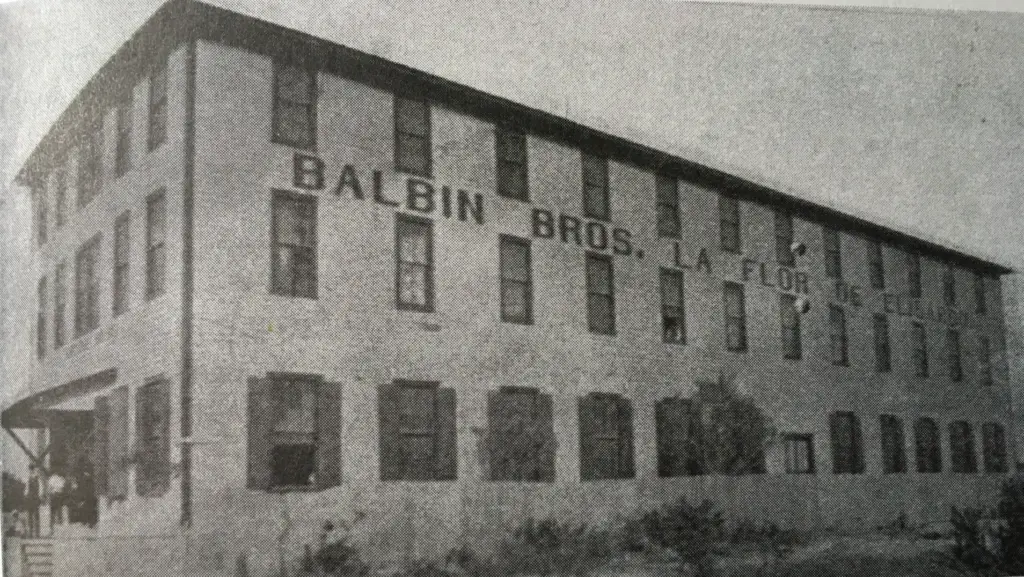
Former Balbín Brothers Cigar Factory

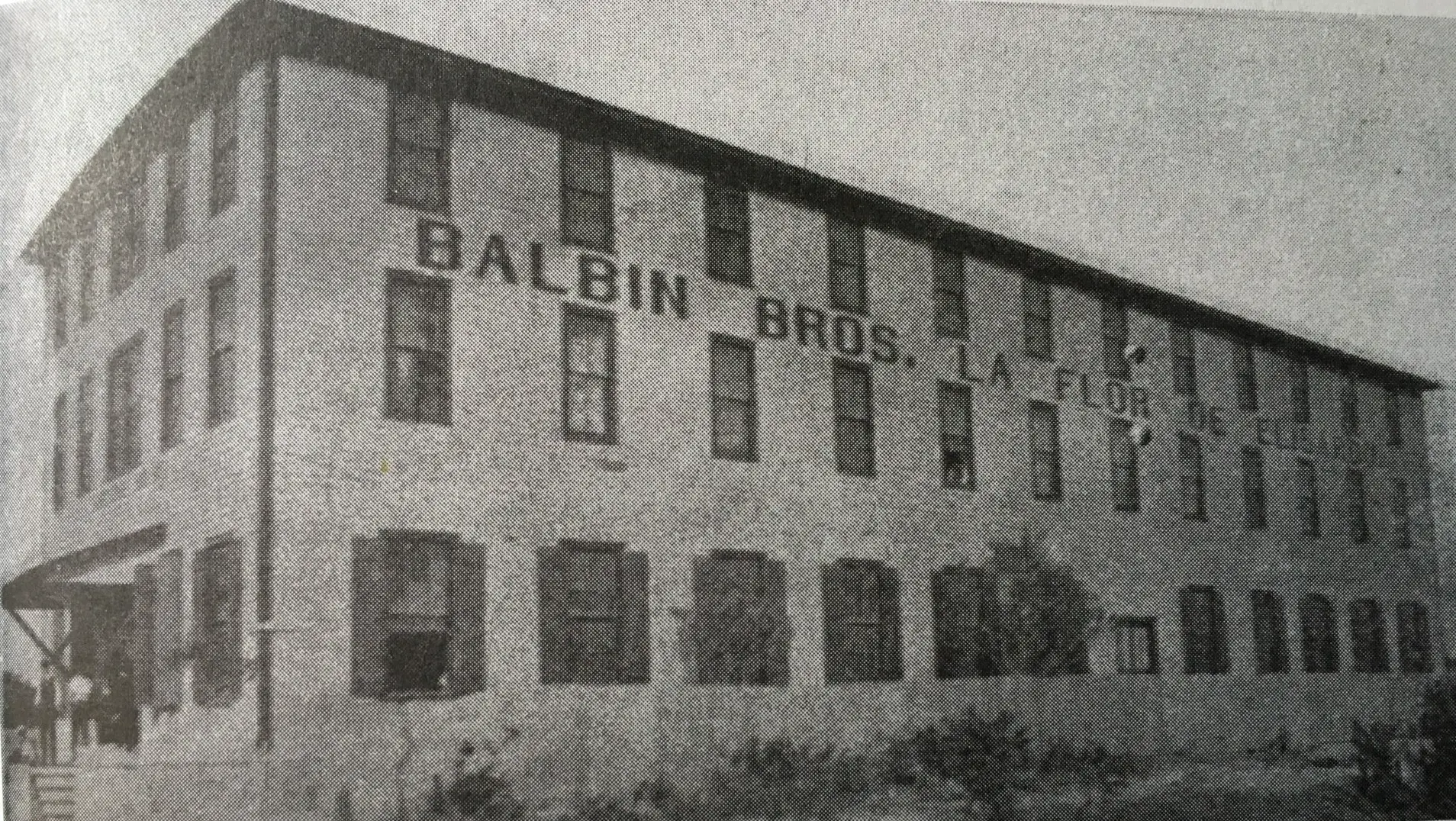
Gabriel, Benigno and Miguel Balbín were three brothers who emigrated from Asturias, Spain to Cuba in the mid-1800s, and from Cuba, to New York in the 1870s. In the Big Apple the brothers were importers of tobacco leaf from Cuba, but they began manufacturing their own cigars in West Tampa, eventually acquiring a factory building there in 1904.

Former Balbín Brothers Cigar Factory

Gabriel, Benigno and Miguel Balbín were three brothers who emigrated from Asturias, Spain to Cuba in the mid-1800s, and from Cuba, to New York in the 1870s. In the Big Apple the brothers were importers of tobacco leaf from Cuba, but they began manufacturing their own cigars in West Tampa, eventually acquiring a factory building there in 1904.

Former José Escalante Cigar Co.

The three story structure, sometimes called the Corina building, was occupied from 1910 until 1940 by Jose Escalante and Company, manufacturers of the popular CORINA brand cigars. This building was originally erected in 1893 by the Vicente Guerra Cigar Company in the Palmetto Beach section of Tampa.

Former José Escalante Cigar Co.

The three story structure, sometimes called the Corina building, was occupied from 1910 until 1940 by Jose Escalante and Company, manufacturers of the popular CORINA brand cigars. This building was originally erected in 1893 by the Vicente Guerra Cigar Company in the Palmetto Beach section of Tampa.

Centro Español de Tampa, Memorial Park

“By the end of the Second World War, many of the grave sites within the Centro Español’s Cementerio Viejo were occupied or reserved for future use. To address this, the Centro decided to purchase and develop land for a second cemetery, Memorial Park, nestled among the cemeteries of the non-Latin establishment in east Tampa.”

Centro Español de Tampa, Memorial Park

“By the end of the Second World War, many of the grave sites within the Centro Español’s Cementerio Viejo were occupied or reserved for future use. To address this, the Centro decided to purchase and develop land for a second cemetery, Memorial Park, nestled among the cemeteries of the non-Latin establishment in east Tampa.”

Centro Asturiano Cemetery Memorial Park

Like the Centro Español, its counterpart and sometimes rival, the Centro Asturiano outgrew its first cemetery, and expanded to a second burial ground further away from the historical center of the Spanish enclaves in Tampa.

Centro Asturiano Cemetery Memorial Park

Like the Centro Español, its counterpart and sometimes rival, the Centro Asturiano outgrew its first cemetery, and expanded to a second burial ground further away from the historical center of the Spanish enclaves in Tampa.

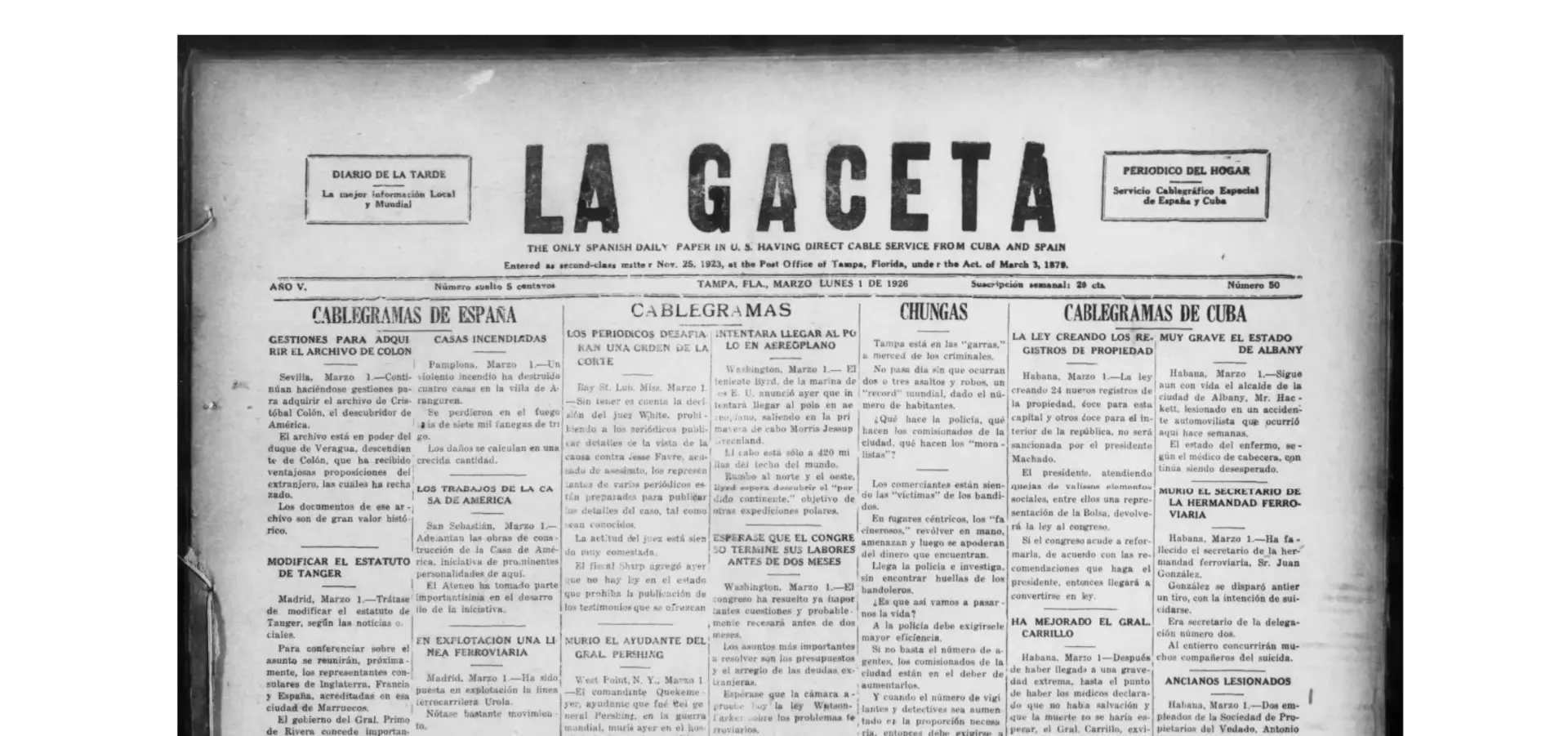
La Gaceta Newspaper

La Gaceta, nowadays a tri-lingual (English, Spanish, Italian) weekly newspaper, is a true Tampa treasure. It was founded in 1922 by Victoriano Manteiga, who came to Tampa from Cuba to work as a lector in the Morgan cigar factory. The legendary Manteiga went from just reading the international news to cigar factory workers, to actually producing and printing the news. Victoriano’s son Rolando eventually took over the paper and was responsible for adding the English and Italian sections. Today, 103 years after its founding, La Gaceta continues reporting on local and world news for the citizens of Tampa, and is run by Patrick Manteiga, grandson of the founder.

La Gaceta Newspaper

La Gaceta, nowadays a tri-lingual (English, Spanish, Italian) weekly newspaper, is a true Tampa treasure. It was founded in 1922 by Victoriano Manteiga, who came to Tampa from Cuba to work as a lector in the Morgan cigar factory. The legendary Manteiga went from just reading the international news to cigar factory workers, to actually producing and printing the news. Victoriano’s son Rolando eventually took over the paper and was responsible for adding the English and Italian sections. Today, 103 years after its founding, La Gaceta continues reporting on local and world news for the citizens of Tampa, and is run by Patrick Manteiga, grandson of the founder.

Vincent & Tampa Cigar Company

Still open for business (and for a boisterous game or two of dominó), this cigar shop in West Tampa is steeped in Tampa history. It is currently run by the Fulgueira family, who maintain a micro-museum on the premises, showcasing the tools of the cigar trade, including the wooden molds that were invented by their descendant, Justo Fulgueira. The “Vincent” in the store name was Vicente Ruilova, a legendary cigar maker. Ruilova was born in Panes (Asturias), in 1913 and emigrated to Tampa with his family as a young child.
Vincent & Tampa Cigar Company

Still open for business (and for a boisterous game or two of dominó), this cigar shop in West Tampa is steeped in Tampa history. It is currently run by the Fulgueira family, who maintain a micro-museum on the premises, showcasing the tools of the cigar trade, including the wooden molds that were invented by their descendant, Justo Fulgueira. The “Vincent” in the store name was Vicente Ruilova, a legendary cigar maker. Ruilova was born in Panes (Asturias), in 1913 and emigrated to Tampa with his family as a young child.
Cementerio del Centro Español de Tampa

On July 22, 1895, the Executive Committee of the Centro Español voted to acquire a parcel of land for a cemetery for its members. In 1904, Pascual Franco would be the first club member to be interred in what is today known as “El Cementerio Viejo”. This initiative would make literal the “cradle to grave” care that Centro Español and Tampa’s other mutual aid societies strived to offer to its members. The cemetery, lovingly cared for by the Centro, today is an oasis of tranquility and memory; the inscriptions and porcelain portraits that adorn the tombstones make this burial ground a veritable archive documenting an important piece of the Spanish diaspora in Tampa.

Cementerio del Centro Español de Tampa

On July 22, 1895, the Executive Committee of the Centro Español voted to acquire a parcel of land for a cemetery for its members. In 1904, Pascual Franco would be the first club member to be interred in what is today known as “El Cementerio Viejo”. This initiative would make literal the “cradle to grave” care that Centro Español and Tampa’s other mutual aid societies strived to offer to its members. The cemetery, lovingly cared for by the Centro, today is an oasis of tranquility and memory; the inscriptions and porcelain portraits that adorn the tombstones make this burial ground a veritable archive documenting an important piece of the Spanish diaspora in Tampa.

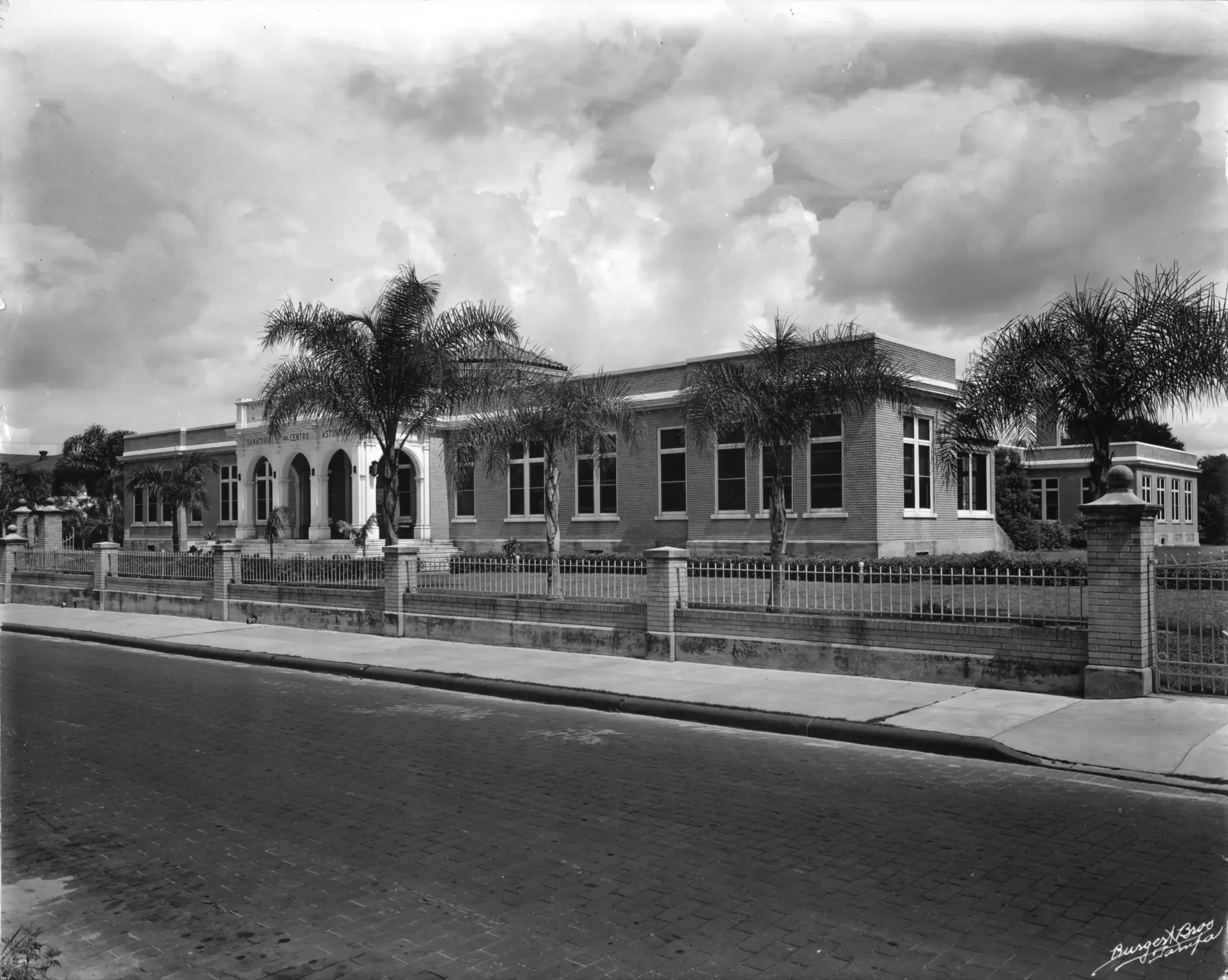
Former Centro Asturiano Hospital 1927-1990

“It was about 1902 when a few members of the Centro Asturiano of Havana took up the matter of extending the services of such a meritorious institution to Tampa by establishing a delegation in this city…” (Spanish Action in Tampa) One of the first initiatives of the Tampa delegation of the Centro Asturiano was to build, in 1905, the Covadonga Sanatorium –a state of the art hospital for its member."

Former Centro Asturiano Hospital 1927-1990

“It was about 1902 when a few members of the Centro Asturiano of Havana took up the matter of extending the services of such a meritorious institution to Tampa by establishing a delegation in this city…” (Spanish Action in Tampa) One of the first initiatives of the Tampa delegation of the Centro Asturiano was to build, in 1905, the Covadonga Sanatorium –a state of the art hospital for its member."

Centro Asturiano Cemetery

In the early 1900's, the Centro Asturiano Society petitioned City Council to set aside and dedicate a piece of land for the Society to use as a burial ground for their members. The City decided to donate the land to the Society now known as Centro Asturiano Cemetery. The cemetery today is an oasis of tranquility and memory; the inscriptions and porcelain portraits that adorn the tombstones make this burial ground a veritable archive documenting an important piece of the Spanish diaspora in Tampa.

Centro Asturiano Cemetery

In the early 1900's, the Centro Asturiano Society petitioned City Council to set aside and dedicate a piece of land for the Society to use as a burial ground for their members. The City decided to donate the land to the Society now known as Centro Asturiano Cemetery. The cemetery today is an oasis of tranquility and memory; the inscriptions and porcelain portraits that adorn the tombstones make this burial ground a veritable archive documenting an important piece of the Spanish diaspora in Tampa.

La Segunda Central Bakery

‘[Juan Moré] was born in Catalonia, Spain and fought in the Spanish-American War in Cuba. There he discovered a traditional recipe for Cuban bread, the adventure of a new country, and a new opportunity. Recipe in hand, he set forth to create the bakery of his dreams in the thriving Cuban district of Ybor City, Florida.” (From their website) The rest is history; four generations later, tampeños still flock to the historical building in Ybor City to get the bread they need for breakfast, lunch and dinner.'

La Segunda Central Bakery

‘[Juan Moré] was born in Catalonia, Spain and fought in the Spanish-American War in Cuba. There he discovered a traditional recipe for Cuban bread, the adventure of a new country, and a new opportunity. Recipe in hand, he set forth to create the bakery of his dreams in the thriving Cuban district of Ybor City, Florida.” (From their website) The rest is history; four generations later, tampeños still flock to the historical building in Ybor City to get the bread they need for breakfast, lunch and dinner.'

Privacy Overview

This website uses cookies so that we can provide you with the best user experience possible. Cookie information is stored in your browser and performs functions such as recognising you when you return to our website and helping our team to understand which sections of the website you find most interesting and useful.

This site is registered on wpml.org as a development site. Switch to a production site key to remove this banner.